Introduction
Publishing a book is an exciting achievement, but it can also feel overwhelming. Many first-time authors spend months or even years writing their manuscript, only to wonder what comes next. Questions about editing, cover design, copyright, printing, and marketing can quickly become confusing. Choosing the right publishing partner is one of the most important decisions you’ll make because it can shape your entire publishing journey.
If you’ve never published a book before, you’re not alone. Thousands of new writers face the same challenges every year. Some worry about finding a trustworthy publisher, while others aren’t sure whether to choose traditional publishing or self-publishing. Many simply want someone to guide them through the process step by step.
This guide explains everything you need to know about Global Publication House and how a professional publishing team can support authors from manuscript to marketplace. Whether you’ve written a novel, children’s book, memoir, business guide, cookbook, or educational resource, understanding the publishing process will help you make informed decisions.
We’ll explore how modern publishing works, the services authors often need, the different publishing models available, and the common mistakes that can delay a successful book launch. By the end of this guide, you’ll have a much clearer picture of what it takes to turn your manuscript into a professionally published book.
Understanding Modern Book Publishing
Publishing has changed dramatically over the last decade. Authors are no longer limited to sending manuscripts to dozens of publishers and waiting months for a response. Today, writers have more options and greater creative control than ever before.
Modern publishing combines professional editing, attractive design, digital technology, global distribution, and marketing strategies that help books reach readers around the world.
What Does a Publishing Company Do?
A publishing company helps transform your manuscript into a finished product that’s ready for readers. While every publisher works differently, most professional publishing teams provide services that cover the entire publishing journey.
Manuscript Evaluation
The process often begins with a review of your manuscript. Editors look at structure, organization, grammar, pacing, and readability. Their goal is to identify areas that can be improved before publication.
Professional Editing
Editing goes far beyond fixing spelling mistakes. Developmental editors focus on story flow and structure. Copy editors improve clarity and consistency, while proofreaders catch the final errors before publication.
Cover Design
People often say, “Don’t judge a book by its cover,” but readers do exactly that. A professionally designed cover creates a strong first impression and encourages potential buyers to learn more.
Interior Formatting
Formatting ensures your book looks polished on every page. Proper spacing, chapter headings, margins, typography, and layout improve the reading experience for both print and digital editions.
ISBN Assignment
An ISBN is the unique identification number assigned to a book. It helps bookstores, libraries, and distributors identify and manage publications.
Printing
Depending on your goals, books may be printed on demand or in larger quantities. Authors can usually choose between paperback and hardcover editions with different paper and finish options.
Distribution
Publishing doesn’t stop after printing. Distribution ensures your book becomes available through online retailers, bookstores, libraries, and other sales channels.
Marketing
Even an excellent book needs visibility. Marketing includes author branding, book launch campaigns, social media promotion, search engine optimization, and advertising to help readers discover your work.
Author Support
Many first-time writers appreciate having experienced professionals available to answer questions throughout the publishing process. Ongoing communication makes the journey much less stressful.
Traditional Publishing vs Self-Publishing vs Hybrid Publishing
Before choosing a publishing path, it’s helpful to understand the differences.
| Feature | Traditional Publishing | Self-Publishing | Hybrid Publishing |
| Ownership | Publisher controls many rights | Author keeps rights | Usually shared agreement |
| Royalties | Lower | Higher | Varies |
| Creative Control | Limited | Full | Shared |
| Time to Publish | Long | Fast | Moderate |
| Upfront Investment | Usually none | Author invests | Shared investment |
| Marketing | Limited unless bestselling | Author responsibility | Shared support |
Traditional publishing can work well for authors seeking broad industry recognition, but acceptance is highly competitive.
Self-publishing gives writers complete creative control and higher royalty potential. Working with a professional Self Publishing Company can also make the process much easier by providing expert guidance while allowing authors to retain ownership of their work.
Hybrid publishing combines elements of both approaches by offering professional publishing services alongside greater author involvement.
The best choice depends on your goals, budget, timeline, and desired level of creative control.
What is Global Publication House?
Choosing the right publishing partner is about more than simply printing a book. Authors often look for guidance, expertise, transparency, and long-term support throughout the publishing journey.
Global Publication House focuses on helping writers move confidently from completed manuscript to professionally published book. Rather than treating every project the same, successful publishing begins by understanding each author’s goals, audience, and vision.
Every book tells a different story. A children’s picture book requires a different publishing strategy than a business guide or memoir. That’s why experienced publishing professionals adapt their approach to fit the needs of each project.
The publishing philosophy centers on quality, collaboration, and author education. Instead of overwhelming new writers with technical language, the process should remain simple, transparent, and easy to understand.
Professional publishing support often includes editing, formatting, cover design, ISBN guidance, printing options, distribution planning, and promotional assistance. Together, these services help create a polished book that readers will enjoy.
Many new writers also search online for Global Publication House reviews before choosing a publishing partner. Reading genuine client experiences and evaluating available services can help authors make confident decisions based on their publishing goals.
Above all, successful publishing is about helping authors share their stories with readers while maintaining professionalism, quality, and respect for each creator’s vision.
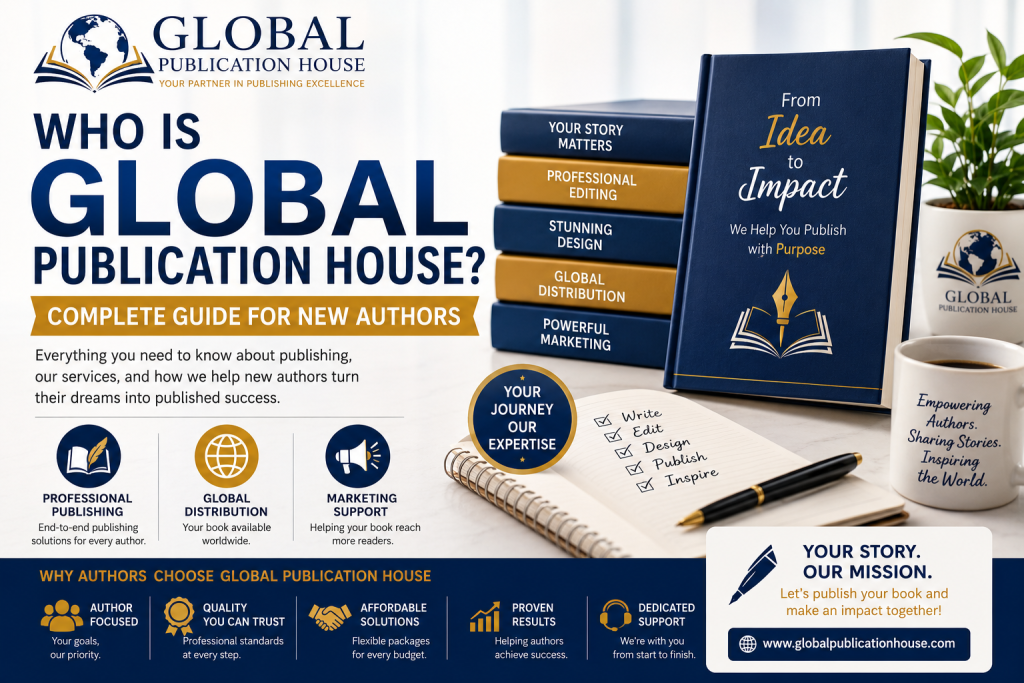
Who is Global Publication House? Complete Guide for New Authors
Publishing Services Offered by a Professional Publishing Team
Publishing a book involves much more than uploading a manuscript online. Every successful book goes through several stages before it reaches readers. Each stage plays an important role in creating a polished, professional product that reflects the author’s hard work.
Many first-time writers look for Affordable Book Publishing Services because they want professional support without unnecessary complexity. The right publishing partner should provide flexible solutions that match both your goals and your budget.
Book Publishing
The publishing journey begins with preparing your manuscript for publication. After the manuscript has been reviewed and edited, it moves into production.
This stage includes:
- Preparing the manuscript for print
- Creating digital editions
- Checking formatting consistency
- Final quality review
- Preparing files for distribution
The goal is to make sure your book looks professional whether someone reads it as a paperback, hardcover, or eBook.
A well-managed publishing workflow also helps reduce delays and ensures every stage is completed accurately.
Professional Editing
Editing is one of the most valuable investments an author can make.
Even experienced writers benefit from having another professional review their work.
Editing generally includes several stages.
Developmental Editing
This focuses on the overall structure of your manuscript.
Editors may recommend improving:
- Chapter order
- Story flow
- Character development
- Dialogue
- Pacing
- Organization
Copy Editing
Copy editing improves sentence clarity while correcting grammar, punctuation, spelling, and consistency.
The purpose isn’t to change your voice.
Instead, it helps your writing become clearer and easier to read.
Proofreading
Proofreading is the final review before publication.
This step catches:
- Typographical errors
- Formatting inconsistencies
- Missing punctuation
- Minor grammar mistakes
Skipping proofreading can leave noticeable errors in the finished book.
Book Cover Design
Your cover is often the first thing readers notice.
Within a few seconds, people decide whether they want to learn more about a book.
Professional designers create covers that:
- Match your genre
- Appeal to your target audience
- Look attractive online
- Print clearly
- Remain readable as small thumbnails
A strong cover doesn’t just look beautiful it communicates professionalism and encourages readers to click or pick up your book.
Interior Formatting
Formatting transforms a manuscript into a book.
Professional formatting includes:
- Proper margins
- Chapter headings
- Consistent fonts
- Page numbering
- Table layouts
- Image placement
- Widow and orphan control
- Readable spacing
Different formats require different layouts.
Paperback editions differ from hardcover books, while eBooks require responsive formatting for multiple devices.
Good formatting creates a smooth reading experience from beginning to end.
ISBN and Copyright Assistance
Many first-time authors aren’t sure what an ISBN does or why copyright matters.
An ISBN acts as your book’s unique identifier.
Bookstores, wholesalers, distributors, and libraries use it to identify your publication.
Copyright protects your original work.
It establishes your ownership and helps prevent unauthorized copying.
Authors should also pay attention to metadata.
Metadata includes:
- Book title
- Subtitle
- Author name
- Description
- Categories
- Keywords
Well-prepared metadata helps readers discover your book more easily through online searches.
Book Printing
Printing options have become much more flexible over the past few years.
Authors commonly choose between:
Print-on-Demand
Books are printed only after someone places an order.
Advantages include:
- Lower upfront costs
- No inventory storage
- Reduced financial risk
Bulk Printing
Authors expecting higher demand sometimes print larger quantities.
Benefits include:
- Lower cost per book
- Inventory for events
- Book signings
- Direct sales
Most publishers also offer both paperback and hardcover editions with multiple paper and finish options.
Global Distribution
Publishing your book is only the beginning.
Readers can’t purchase your book if they don’t know where to find it.
Distribution connects your book with:
- Online bookstores
- Libraries
- Retail partners
- International markets
- Wholesale networks
Understanding a Global Book Distribution Guide helps authors learn how books travel from publishers to readers around the world.
A strong distribution strategy increases visibility and creates more opportunities for book sales.
Many publishers also provide guidance on international availability, allowing readers in different countries to access your work more easily.
Book Marketing
Publishing your book doesn’t automatically bring readers.
Marketing creates awareness and helps people discover your work.
Common marketing activities include:
- Author branding
- Amazon listing optimization
- Search engine optimization (SEO)
- Press releases
- Email marketing
- Social media promotion
- Book launch campaigns
- Paid advertising
- Content marketing
Successful marketing is a long-term process rather than a one-time event.
Building an audience takes consistency and patience.
How the Publishing Process Works
Every publishing project follows a series of carefully planned steps.
Understanding each stage helps authors know what to expect.
Step 1: Submit Your Manuscript
Everything begins with your completed manuscript.
The publishing team reviews your work and discusses your publishing goals.
Step 2: Publishing Consultation
During this stage, you discuss:
- Publishing options
- Timeline
- Target audience
- Distribution goals
- Marketing plans
This conversation helps create a personalized publishing strategy.
Step 3: Professional Editing
Editors carefully review the manuscript and recommend improvements while preserving the author’s unique voice.
Step 4: Book Design
Professional designers prepare:
- Front cover
- Back cover
- Spine
- Interior graphics
- Layout elements
The result is a visually appealing book that reflects its content.
Step 5: Formatting
The manuscript is converted into professional print and digital layouts.
Every page is checked for consistency and readability.
Step 6: Publishing Approval
Before publication, the author reviews the final files.
Any last adjustments are completed before approval.
Step 7: Printing and Distribution
Once approved, books move into production and become available through selected retail and distribution channels.
Authors who study a Global Book Distribution Guide often gain a better understanding of how their books reach readers in different regions and sales platforms.
Step 8: Marketing and Promotion
After publication, promotional efforts begin.
Marketing may include:
- Launch announcements
- Promotional campaigns
- Media outreach
- Author interviews
- Social media engagement
- Search optimization
Consistent promotion helps maintain visibility long after launch day.
Publishing Workflow Infographic
Manuscript → Consultation → Editing → Cover Design → Formatting → Author Approval → Printing & Distribution → Marketing & Promotion
Benefits of Working with a Professional Publishing Partner
Choosing experienced publishing professionals offers several advantages.
- Expert guidance throughout the process.
- Time savings by avoiding common mistakes.
- Higher-quality editing and design.
- Better production standards.
- Professional printing options.
- Worldwide distribution opportunities.
- Ongoing marketing support.
- Dedicated project management.
- A smoother publishing experience from start to finish.
Many writers also compare Global Publication House reviews with other publishing providers before making a decision. Reading authentic experiences can help authors understand what level of service, communication, and support they should expect.
Likewise, comparing different Affordable Book Publishing Services allows authors to choose solutions that fit both their publishing goals and financial plans.
Working with an experienced Self Publishing Company can also give authors greater creative control while providing professional assistance throughout every stage of publication.
Who is Global Publication House? Complete Guide for New Authors
Why First-Time Authors Need the Right Publishing Support
Writing a book takes dedication, patience, and creativity. Publishing it successfully requires a different set of skills. That’s why many first-time authors look for professional guidance before taking the next step.
It’s completely normal to feel uncertain during the publishing process. You may wonder if your manuscript is ready, whether your cover will attract readers, or how your book will appear in online stores. These are common concerns, and they can be addressed with proper planning and expert support.
Here are some of the biggest questions new authors often have.
“Is my manuscript good enough?”
Almost every writer asks this question. Even bestselling authors work with editors before publishing. A fresh pair of professional eyes can improve clarity, strengthen the structure, and polish the final manuscript while preserving your unique writing style.
“Will readers like my book?”
No publisher can guarantee that every reader will enjoy every book. However, investing in professional editing, attractive cover design, and thoughtful marketing greatly improves your chances of making a positive first impression.
“How do I protect my work?”
Copyright protection and proper publishing documentation help establish ownership of your original work. Understanding these basics before publication gives authors greater confidence.
“How will people find my book?”
Publishing is only the beginning. Readers discover books through search engines, online bookstores, recommendations, reviews, social media, advertising, and word of mouth. A consistent marketing strategy helps your book stay visible over time.
Publishing Mistakes New Authors Should Avoid
Many publishing challenges can be avoided with careful preparation. Here are some of the most common mistakes new authors make.
Publishing Without Professional Editing
It’s easy to become so familiar with your manuscript that small mistakes go unnoticed. Professional editing improves readability and helps create a stronger final product.
Choosing a Weak Book Cover
Your cover is your book’s first impression. A generic or poorly designed cover may discourage potential readers before they even read the description.
Ignoring Interior Formatting
Professional formatting improves the reading experience and gives your book a polished appearance. Poor formatting can distract readers and reduce credibility.
Skipping Metadata Optimization
Metadata includes your title, subtitle, author name, categories, and keywords. Accurate metadata helps online retailers understand your book and improves discoverability.
Writing a Weak Book Description
Your book description should explain what readers can expect while creating curiosity. Avoid revealing everything. Instead, encourage readers to want more.
Having No Marketing Plan
Publishing your book doesn’t automatically generate sales. Creating a marketing plan before launch allows you to build excitement and reach your target audience more effectively.
Neglecting Your Author Brand
Readers often connect with authors as much as they connect with books. Maintaining a professional website, social media presence, and consistent author profile helps build long-term trust.
Choosing the Wrong Categories
Selecting the most relevant categories helps your book reach readers who are already interested in your genre.
Using Poor Keywords
Researching the words readers actually search for can improve your book’s visibility on search engines and online bookstores.
Giving Up Too Soon
Many books take time to gain momentum. Continue promoting your work, connecting with readers, and improving your marketing efforts after publication.
Frequently Asked Questions
What is a publishing company?
A publishing company helps authors prepare, produce, distribute, and promote books through professional services such as editing, design, formatting, printing, and marketing.
Can first-time authors publish successfully?
Yes. Many successful authors published their first books with professional guidance and careful planning.
What genres can be published?
Most publishers work with fiction, nonfiction, children’s books, memoirs, business books, educational titles, cookbooks, inspirational books, and many other genres.
Do authors keep the rights to their books?
This depends on the publishing agreement. Authors should always review their contract carefully and understand ownership rights before publishing.
Why is editing important?
Editing improves readability, corrects mistakes, strengthens organization, and helps present your ideas more clearly.
What is an ISBN?
An ISBN is a unique identification number used by bookstores, distributors, and libraries to identify published books.
Can Books be Published as Both Print and eBooks?
Yes. Most modern publishing workflows support paperback, hardcover, and digital editions.
How long does publishing usually take?
The timeline varies depending on editing requirements, design revisions, production schedules, and distribution preparation. Many projects take several weeks to a few months.
Is book marketing necessary?
Absolutely. Even well-written books need marketing to reach their intended audience and generate long-term sales.
How important are reader reviews?
Reviews provide valuable feedback and help build credibility. Positive reviews can encourage new readers to consider purchasing your book.
What Should Authors Prepare Before Publishing?
Authors should have a completed manuscript, clear publishing goals, an understanding of their target audience, and a willingness to collaborate throughout the publishing process.
Final Thoughts
Publishing a book is one of the most rewarding milestones in an author’s journey. It transforms months or even years of hard work into something readers can enjoy, learn from, and remember.
While the process may seem complicated at first, breaking it into manageable steps makes it much easier to understand. From editing and design to printing, distribution, and marketing, every stage contributes to the success of your book.
The most important decision isn’t simply choosing how to publish. It’s choosing a publishing approach that aligns with your goals, your budget, and your long-term vision as an author.
Take time to research your options, ask questions, compare services, and understand each stage of the publishing journey before making a commitment. A well-informed decision today can lead to a smoother publishing experience tomorrow.
Remember that every bestselling author started exactly where you are now—with an idea, a manuscript, and the determination to share a story with the world. Your publishing journey is unique, and with careful preparation, professional support, and consistent promotion, your book has the opportunity to reach the readers it was written for.
Looking for more publishing insights? Read our companion article, How Global Publication House Helps Authors Publish Smarter, on Medium for additional guidance on professional publishing, book production, and marketing strategies
Whether you’re preparing your very first manuscript or planning your next publication, investing in quality, professionalism, and thoughtful planning will always be one of the best decisions you can make as an author.